


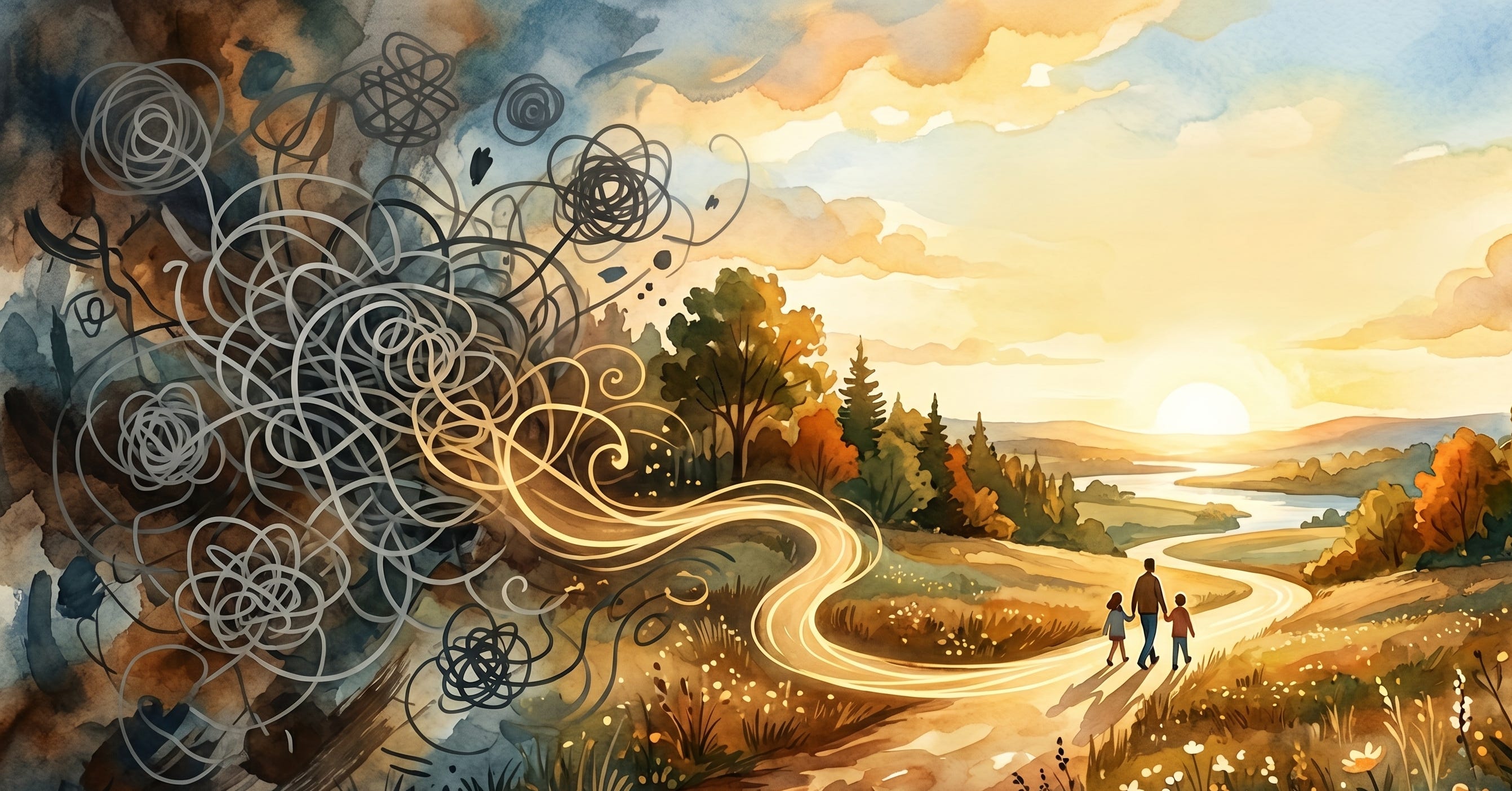
I keep falling into the same trap. I read an upsetting news story and spiral into a world of worry about something totally outside of my control.
My news consumption is way down. I no longer watch TV news or listen to it on the radio. I do scan the Wall Street Journal, and sometimes the New York Times.
But even 20 minutes of consuming news can lead to hours of angst about a future that may never happen, over which I have no control, and that moves me away from living in the present.
True insanity! I keep repeating the same behavior, somehow expecting different results.
I try to cut myself off and live in a news-free cocoon. I can’t do it. It feels reckless. I somehow believe that if I pay attention to the news, I can protect my loved ones from a catastrophic threat. Possibly true, probably not. Still, I find it comforting to believe that maybe, just maybe, if I pay enough attention, I can keep my family safe and secure.
I needed another approach to help me get out of the news–worry–distraction trap. What I came up with is something I call the Alternate Story. Here’s how I used it recently to separate fact from fiction and identify the source of my anxiety.
The news is awash with stories about artificial intelligence (AI) and its potential to destroy white-collar jobs. My daughter works in a human resources and operational capacity for an Atlanta wealth management firm, exactly the type of job the pundits predict that AI will take over. My son is a high school math teacher for kids with learning differences. I would have thought his job was safe, and now I’m not so sure. I recently read that some experts predict AI will replace 30% of teachers.
Easy for me to go down rabbit holes like this. Suddenly I’m buried in fear. What is going to happen to my kids and my grandchildren?
The Alternate Story helps me climb out of my hole. It allows me to recognize that my fears flow from stories that my mind concocts about the future. I force myself to list what I know for sure, what I’m telling myself, and the feelings that result.
The Facts: AI is a revolutionary technology. Many jobs, including my children’s, may be at risk. As of today, my kids are thriving at work. They are integral members of the team, are developing professionally, and feel appreciated for their contributions. There is no indication their jobs are at risk.
My Story: Scary times are coming. In the next few years, AI may replace their jobs. What if they can’t find alternatives? Maybe there will be no jobs available to them in their fields! My wife Heidi and I will need to step in and support them, financially and emotionally.
My Feelings: anxious, frightened, sad, frustrated, despondent.
These feelings don’t come from the facts. They come from the story I create about those facts.
So I try a different story.
Positive Alternate Story: My children are bright, creative, hardworking, and resilient. If they lose their jobs to AI, they will find new ones. It may not be easy. They will figure it out.
My Feelings: hopeful and proud.
When I change the story, I change how I feel.
The challenge is that I don’t know what will happen. The first story is a negative prediction about the future; the second is a positive one. My mind can bounce between the two all day long.
So I try something else—a reality-based story.
Reality-Based Alternate Story: I don’t know what the future holds. Odds are it will be different from whatever I imagine now. Struggle is part of life, for me and for my kids. AI may replace their jobs, and it may not. Whatever happens, my children will do the best they can, and Heidi and I will support them. Not so much that we take away their struggles and opportunities to learn and grow. Just enough that they know they have a safety net beneath them.
My Feelings: grounded, accepting, calm.
That story feels different. Not because life will be easy. But because it’s true.
Why am I prone to imagining a world where I feel threatened?
Part of it is a desire to control the uncontrollable. I feel better pretending I can protect the people I love from heartache, misfortune, and struggle. I can’t.
Part of it is fear of confronting my mortality. Just this year, two close friends have been battling life-threatening cancer. None of us is guaranteed a future free of suffering.
Distracting myself with imaginary fears about AI is easier than sitting with what I don’t want to face. The Alternate Story helps me recognize that these are just the stories I create about the future. But it also brings me back to something simpler, and harder.
Every time I disappear into a story about what might happen in the future, I miss what is already here. This is my life. Right now. Here in the present.
And it’s more than enough, if I’m willing to stay here.
Until our next conversation,
David
Try the Alternate Story exercise
I’ve found a way to bring myself back to the present when my worries spiral. I wanted to offer you a way to try it yourself at the link below. Please know this is a completely private space for your personal reflections. Nothing you type here is stored, saved, or sent anywhere.
Small Steps & Worthy Questions
Identify the distraction
What am I avoiding by telling myself this story?Catch the spiral early
If I start to feel anxious, ask: What are the actual facts here?Preparation or avoidance
Is my worry helping me prepare or avoid a difficult reality?Name the feeling
Am I afraid, angry, sad? Naming the feeling tends to lessen its grip.Accept what can’t be controlled
What would change if I accepted that I can’t protect the people I love from pain, sorrow, and heartache?
If you love this, share it with your friends, foes, and even perfect strangers. Let’s change the way America thinks about money.
LinkedIn | Facebook | Instagram | X / Twitter | Bluesky
I love the approach of the alternate story. The rabbit hole keeps us on the narrow vision of the doomsday, and robs us of today’s blessings.
Your approach is a profound and grounding reminder often attributed to the timeless wisdom in the Sermon on the Mount (Matthew 6:34), that it encourages us to anchor our energy in the present moment rather than letting the uncertainties of the future weigh us down.
I love the approach of the alternate story. The rabbit hole keeps us on the narrow vision of the doomsday, and robs us of today’s blessings.
Your approach is a profound and grounding reminder often attributed to the timeless wisdom in the Sermon on the Mount (Matthew 6:34), that it encourages us to anchor our energy in the present moment rather than letting the uncertainties of the future weigh us down.